
Phormingochilus
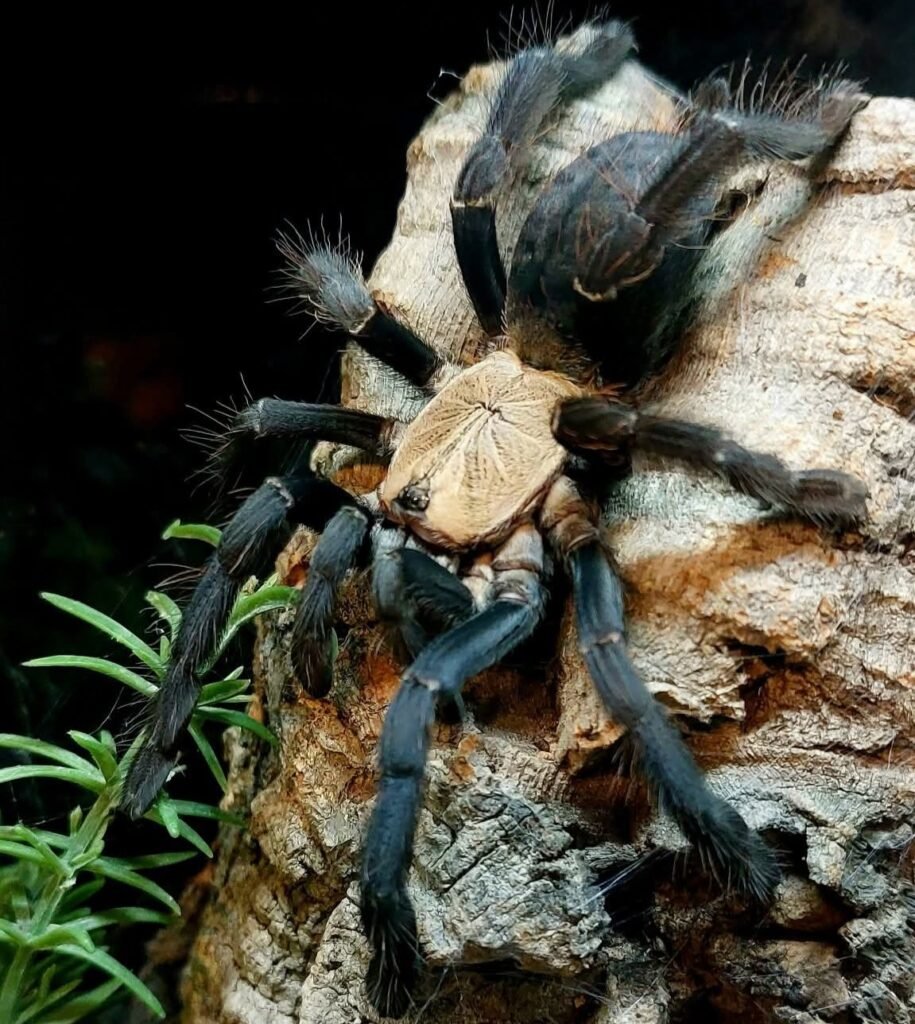
Phormingochilus is a genus of striking Old World arboreal tarantulas native to the tropical rainforests of Borneo and Sulawesi in Southeast Asia. This medium-to-large genus features mature females that reach an impressive diagonal leg span of 5 to 8 inches (13 to 20 cm). They possess a highly defensive, skittish, and lightning-fast temperament; because they lack urticating hairs, they are quick to deliver a bite and carry medically significant venom.
- Phormingochilus sp. “Ackaya”Ackaya Tree Tiger – Borneo
- Phormingochilus arboricola (Borneo Black) – Borneo
- Phormingochilus everetti (Sarawak Earth Tiger) – Borneo
- Phormingochilus hatihati (Purple Earth Tiger) – Sumatra, Indonesia
- Phormingochilus pennellhewlettorum (Bario Bat Eater) – Borneo
- Phormingochilus sp. “Sabah Blue” Sabah Blue Earth Tiger – Borneo
- Phormingochilus tigrinus
- Phormingochilus carpenteri (Sulawesi Black ) – Sulawesi
The Ultimate Phormingochilus Care Sheet & Supply Guide
Introduction & Temperament Profile
The genus Phormingochilus comprises large, purely arboreal Old World tarantulas native to the dense, humid rainforests of Southeast Asia (predominantly Borneo and Sumatra). Often grouped under the umbrella of “Earth Tigers” alongside their close relatives in the Omothymus and Lampropelma genera, they are highly sought after for their velvety, imposing appearance and incredible arboreal hunting prowess.
- Behavioral Reality: Phormingochilus species are exceptionally fast, deeply reclusive, and highly defensive. Because they are Old World spiders, they lack urticating hairs and rely entirely on their medically significant venom if threatened. Unlike some arboreals that immediately sprint away, a disturbed Phormingochilus will easily stand its ground, throw up a striking threat posture, and slap or bite repeatedly if cornered.
- Experience Requirement: They are strictly suitable for advanced, expert keepers only. They require precise husbandry and calm, confident management. Never attempt to handle a Phormingochilus species.
1. Hardware Shopping List (Everything You Need)
| Component | Target Requirement | Purpose / Notes |
|---|---|---|
| Sling Enclosure | Tall plastic vial or acrylic container (approx. 5x5x12 cm) | Requires extra depth as slings frequently burrow into the dirt at the base. |
| Juvenile Enclosure | Vertical acrylic or glass terrarium (approx. 15x15x30 cm) | Accommodates rapid mid-stage growth and heavy structural webbing. |
| Adult Enclosure | Front-opening vertical terrarium (minimum 30x30x45 cm) | Essential for adult vertical climbing, hunting space, and massive webbing structures. |
| Hardscape | Thick, vertical cork bark slabs or hollow logs | Simulates the large tree hollows they naturally inhabit. |
| Substrate | Coco coir, peat moss, and sphagnum moss blend | Must be moisture-retaining to support their strict humidity needs. |
| Foliage | Heavy silk or plastic fake terrarium plants | Provides crucial anchor points for extensive web curtains. |
| Watering | Elevated shallow water dish (plus a secondary floor dish) | Dual water dishes ensure they can hydrate regardless of where they choose to dwell. |
| Tools | 30 cm stainless steel feeding tongs & soft paintbrushes | Absolute necessity to keep hands completely out of the strike zone. |
| Safety Gear | Large clear catch cups and rigid plastic/cardboard sheets | Vital for secure, high-stakes enclosure transfers. |
2. Enclosure Design & The “Semi-Arboreal” Sling Phase
- The Ontogenetic Shift: As tiny spiderlings (slings) and small juveniles, Phormingochilus act very much like burrowers (fossorial). They will dig deep into the substrate at the base of their cork bark and create a subterranean retreat before extending it upwards into a silk tube.
- Adult Architecture: As they mature into adults, they become strictly tree-dwelling, weaving vast, thick sheets of opaque silk that often completely coat the upper half of their cork bark and foliage.
- Front-Opening Requirement: Because adults web heavily from the top down, a top-opening enclosure will constantly tear their primary retreats. Front-opening enclosures are mandatory for stress-free maintenance.
- Cross-Ventilation Mandate: Because these spiders require higher ambient moisture levels, excellent cross-ventilation is vital. Without continuous horizontal airflow through the sides of the enclosure, the humid environment will rapidly become stagnant and moldy, which is fatal to Southeast Asian arboreals.
3. Climate & Environmental Parameters
- Temperature: Keep ambient room temperatures between 23°C and 28°C. They are tropical canopy species and do poorly if exposed to prolonged cold.
- Heating Warning: Never use overhead heat lamps or ceramic emitters. If your room drops below 19°C consistently, attach a low-wattage heat mat to the outside upper-side wall of the tank, regulated strictly by a digital thermostat.
- Humidity (75%–85%): They require a consistently humid environment. Maintain this by keeping the bottom half of the substrate damp (never a muddy swamp) and mixing in moisture-retaining sphagnum moss. Lightly mist the enclosure walls and fake leaves twice a week. Ensure the top layer of substrate is allowed to dry slightly between waterings to maintain clean air.
4. Feeding & Dietary Schedule
Phormingochilus possess an voracious, explosive appetite. They are incredible to watch hunt, often taking down prey items seemingly too large for them with absolute precision.
- Approved Prey: Crickets, Dubia roaches, and Red Runner roaches. Ensure the insect is appropriately sized (smaller than the tarantula’s body length).
- Sling Schedule: 1 small insect every 4 to 6 days.
- Juvenile Schedule: 1 to 2 medium insects every week.
- Adult Schedule: 2 to 3 large crickets or 1 large roach every 10 to 14 days.
- Molting Protocol: When in “pre-molt,” they will completely web up the openings to their silk tunnels, blocking themselves off from the world. Never leave live insects in the enclosure during this time. Do not attempt to feed them until at least 10–14 days after they have shed their skin and their fangs have fully hardened to a jet-black colour.
5. Top Genus Species to Know
- Sabah Blue Earth Tiger (Phormingochilus sp. “Sabah Blue”): A magnificent, heavily built species. Females mature into a stunning, deep velvety charcoal-grey with subtle dark blue/purple iridescent undertones on their legs.
- The Borneo Black (Phormingochilus arboricola): A highly prized, massive arboreal species that displays a solid, rich jet-black coloration upon reaching maturity. They are known for being particularly defensive.
- Sulawesi Black (Phormingochilus carpenteri): A beautiful, classic Asian arboreal displaying intricate patterns on its abdomen and a rich, golden-brown carapace.