


India
Poecilotheria formosa — Salem ornamental
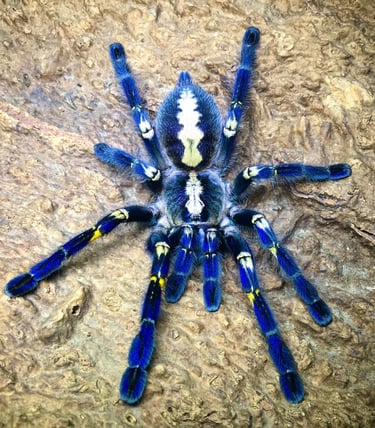
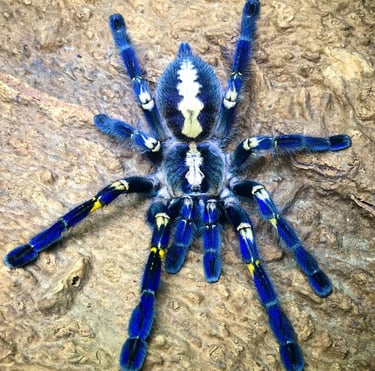
Poecilotheria metallica — Gooty sapphire ornamental
Poecilotheria miranda — Bengal spotted ornamental
Poecilotheria regalis — Indian Ornamental
Poecilotheria rufilata — red slate ornamental
Poecilotheria striata — Mysore ornamental, Pedersen's ghost ornamental
Poecilotheria tigrinawesseli — Wessel's tiger ornamental
Sri Lanka
Poecilotheria fasciata (Latreille, 1804) — Sri Lankan ornamental
Poecilotheria ornata Pocock, 1899 — fringed ornamental
Poecilotheria rajaei Nanayakkara, et al., 2012 — Mankulam pink banded ornamental
Poecilotheria smithi Kirk, 1996 — yellow backed ornamental
Poecilotheria subfusca Pocock, 1895 — ivory ornamental
Poecilotheria srilankensis Nanayakkara, et al., 2020
Both countries
Poecilotheria hanumavilasumica — Rameshwaram ornamental
Poecilotheria vittata — Magam ornamental
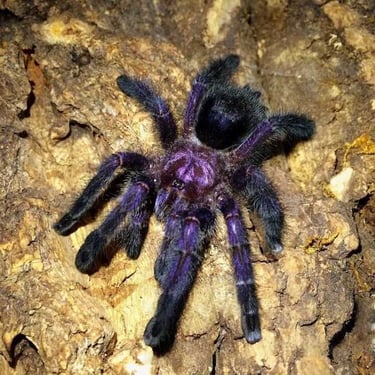
Psalmopoeus
This genus is native to South America, Central America, Trinidad and Tobago, and Mexico.
Species
Psalmopoeus cambridgei – Trinidad and Tobago
Psalmopoeus chronoarachne - Ecuador
Psalmopoeus copanensis - Honduras
Psalmopoeus drolshageni - Costa Rica
Psalmopoeus ecclesiasticus – Colombia and Ecuador
Psalmopoeus intermedius - Panama
Psalmopoeus irminia – Venezuela, Guyana and Brazil
Psalmopoeus langenbucheri – Venezuela
Psalmopoeus petenensis - Guatemala
Psalmopoeus pristirana - Ecuador
Psalmopoeus pulcher – Panama and Colombia
Psalmopoeus reduncus – Nicaragua, Costa Rica and Panama
Psalmopoeus sandersoni - Belize
Psalmopoeus satanas - Ecuador
Psalmopoeus victori – Mexico
Psalmopoeus wallacea - Honduras
Psalmopoeus zombie - Colombia
Poecilotheria
Commonly known as ornamental tarantulas, known for their vivid colour patterns, fast movement, and potent venom. As of 2019 all species are protected under CITES.
- These are one of the largest species -
Poecilotheria
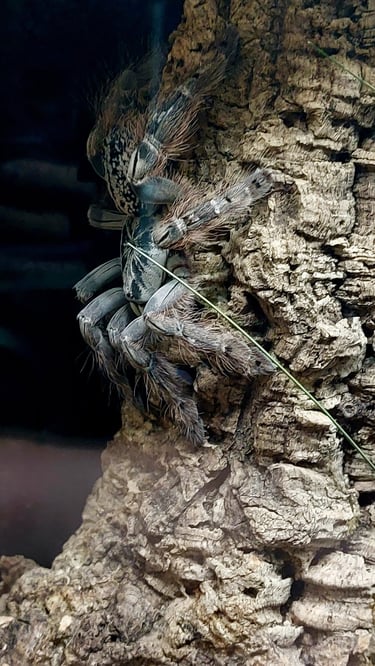
This genus is native to India and Sri Lanka. It was first described by Eugène Louis Simon in 1885. Commonly known as ornamental tarantulas, known for their vivid colour patterns, fast movement, and potent venom compared to other tarantulas. As of 2019 all species are protected under CITES.
These are one of the largest arboreal species -
Species
Psalmopoeus
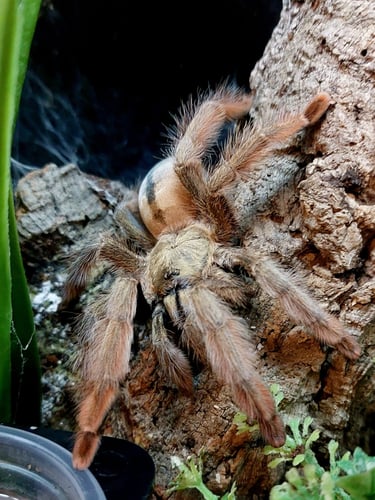
This genus is native to South America, Central America, Trinidad and Tobago, and Mexico. Psalmopoeus victori being the first arboreal tarantula of Mexico. This species are believed to be relatively venomous, and research in the venom of P. cambridgei shows it to target the same nociceptor as capsaicin, the molecule causing irritation in chilli peppers.
Species
Avicularia
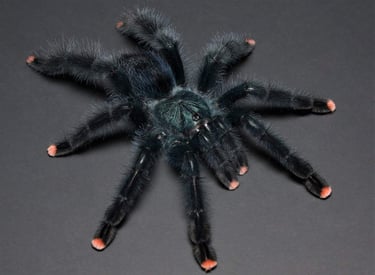
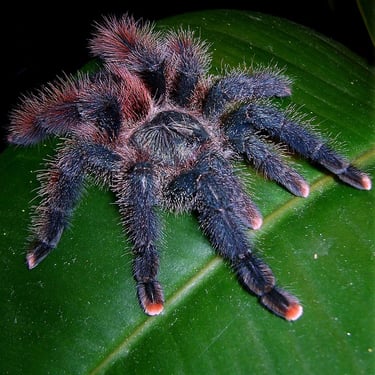
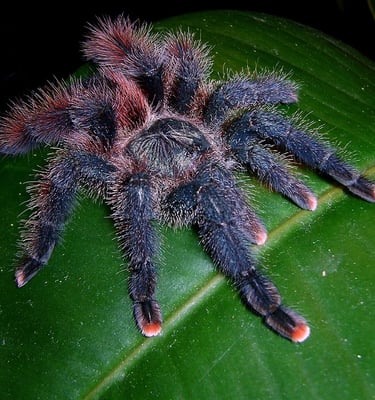
Native to Panama, the Caribbean, and tropical South America. Each species in the genus has very distinguishable pink foot pads.
Species
Avicularia
Native to Panama, the Caribbean, and tropical South America. Each species in the genus has very distinguishable pink foot pads. Urticating hairs are distinct to New World tarantulas including the Avicularia that are attached to the spider's cuticle via a stalk. These spiny, barbed hairs are used as a defence against potential intruders as well as embedded into silk to protect the egg sac. In active defence, the hairs are released by contact with the stimulus and rubbed in. Avicularia avicularia are among the tarantulas most commonly kept as pets for their "stunning" color and size.
Species
Avicularia avicularia – Venezuela, Guyana, Suriname, French Guiana, Trinidad and Tobago, Brazil, Peru, Bolivia
Avicularia caei – Brazil
Avicularia glauca – Panama
Avicularia hirschii – Ecuador, Peru, Brazil
Avicularia juruensis – Colombia, Ecuador, Peru, Brazil
Avicularia lynnae – Peru, Ecuador
Avicularia merianae – Peru
Avicularia minatrix – Venezuela, Brazil
Avicularia purpurea – Colombia, Ecuador, Peru
Avicularia rufa – Ecuador, Peru, Bolivia, Brazil
Avicularia taunayi – Brazil
Avicularia variegata – Venezuela, Brazil