
Description
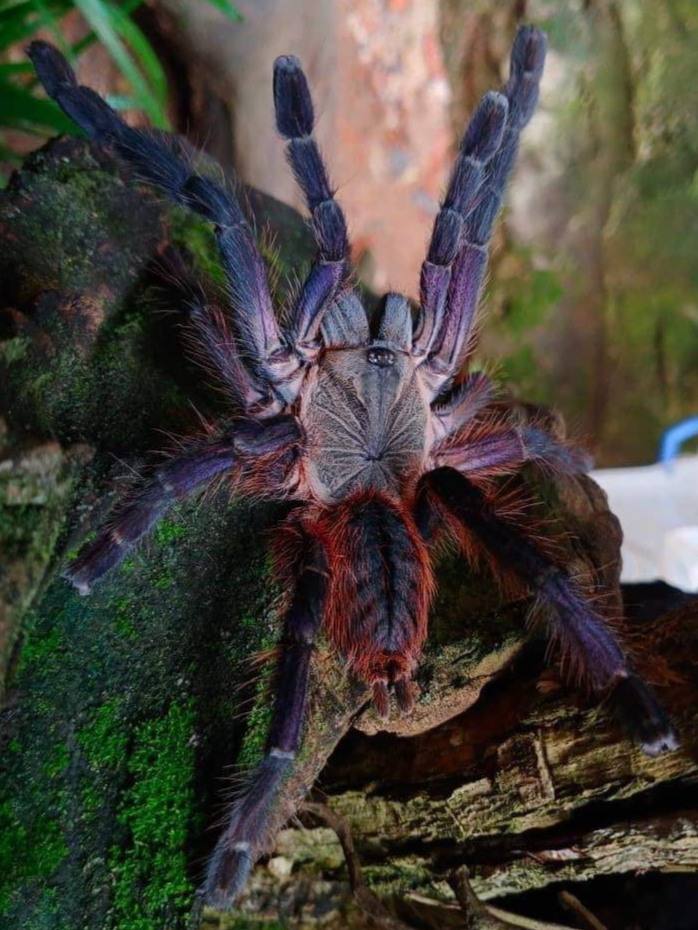
Orithoctinae sp. “Phan Cay Red” is an arboreal tarantula originating from the forest canopies of Vietnam, where its rich rufous coloration and subtle violet highlights intensify with each molt. Adults typically reach 7–8 inches diagonal leg span, giving this species a commanding presence suitable for experienced enthusiasts.
🌈 Key Visual Features
- Deep red body and leg coloration that becomes more saturated with age
- Violet undertones visible under natural or LED lighting
- Elegant arboreal posture and long, graceful leg structure
- Collector‑grade appearance ideal for display enclosures
🧠 Temperament & Behavior
Although an Old World species, Phan Cay Red is known for a more reserved defensive posture, often choosing to retreat rather than escalate. It remains strictly hands‑off, making it best suited for keepers comfortable with observing rather than interacting.
🏡 Enclosure Requirements
- Tall, well‑ventilated arboreal setup
- Vertical cork bark or branches for climbing
- Moderate humidity with good airflow
- Ideal temperature range: 72–78°F
- Substrate that retains moisture without becoming waterlogged
🍽️ Feeding
This species thrives on a varied diet of appropriately sized insects such as crickets, roaches, and other standard feeder invertebrates. Feeding frequency typically decreases as the spider reaches adulthood.
✅ Ideal For
- Advanced hobbyists seeking a rare, visually striking arboreal species
- Collectors looking for a premium display tarantula
- Keepers who appreciate bold coloration and large size without high defensiveness
📦 Additional Notes
This description is intended for informational and educational use on an e‑commerce product page. If you’d like, I can format this into a full product listing layout with bullet‑point specs, care icons, or a short marketing tagline.