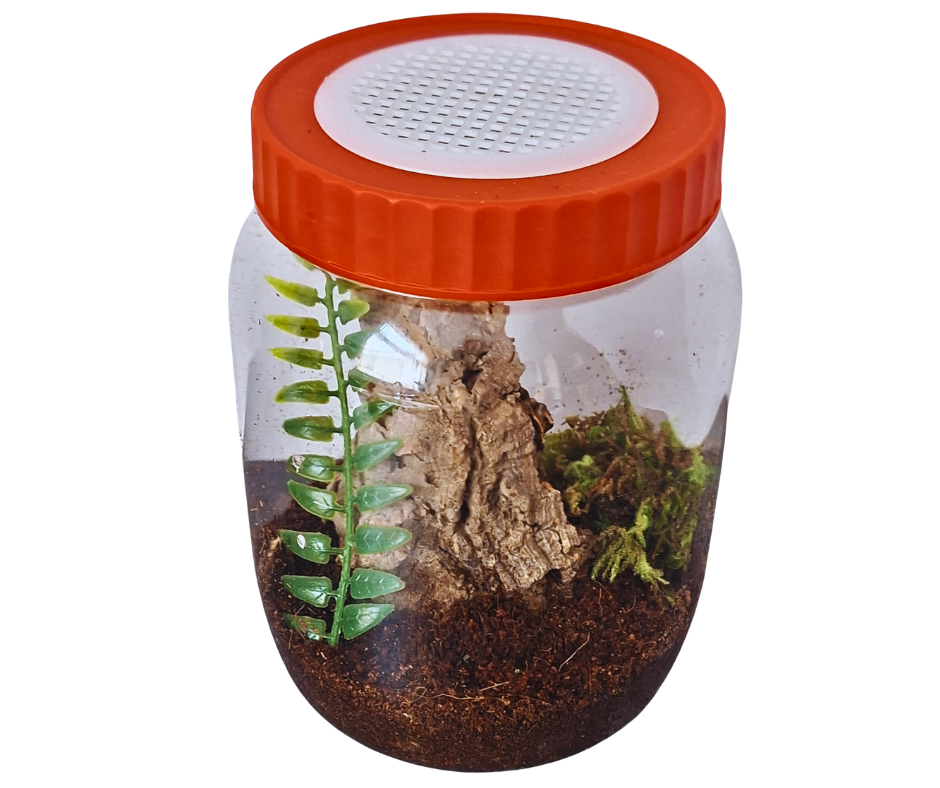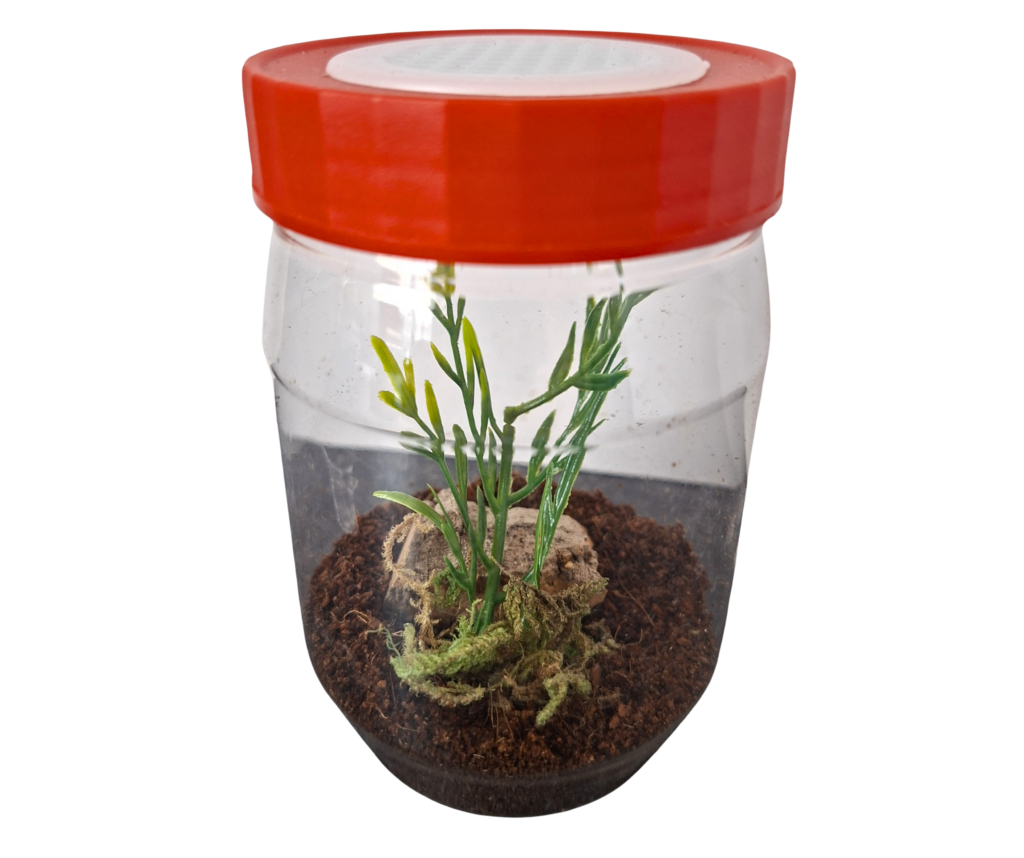
Description
- Unsexed spiderling – 4cm
- Temperature – 21-25°C
- Humidity – 60–75%
- Leg span – 25cm
- Origin – Trinidad
- Intermediate
Introduction to Psalmopoeus cambridgei
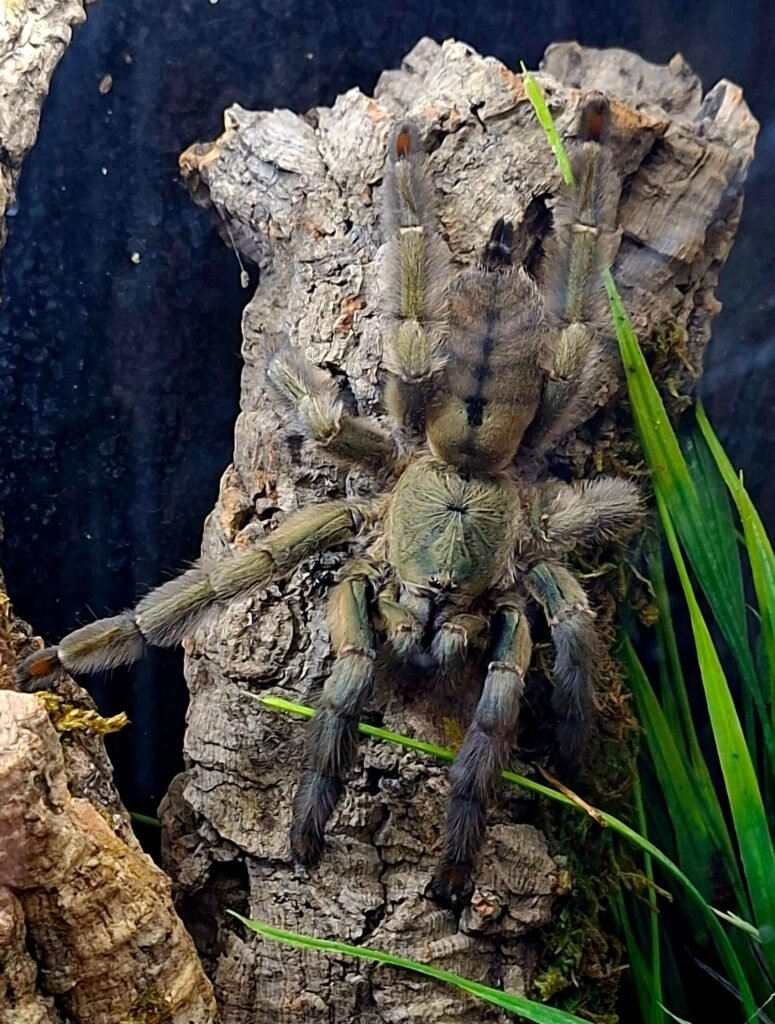
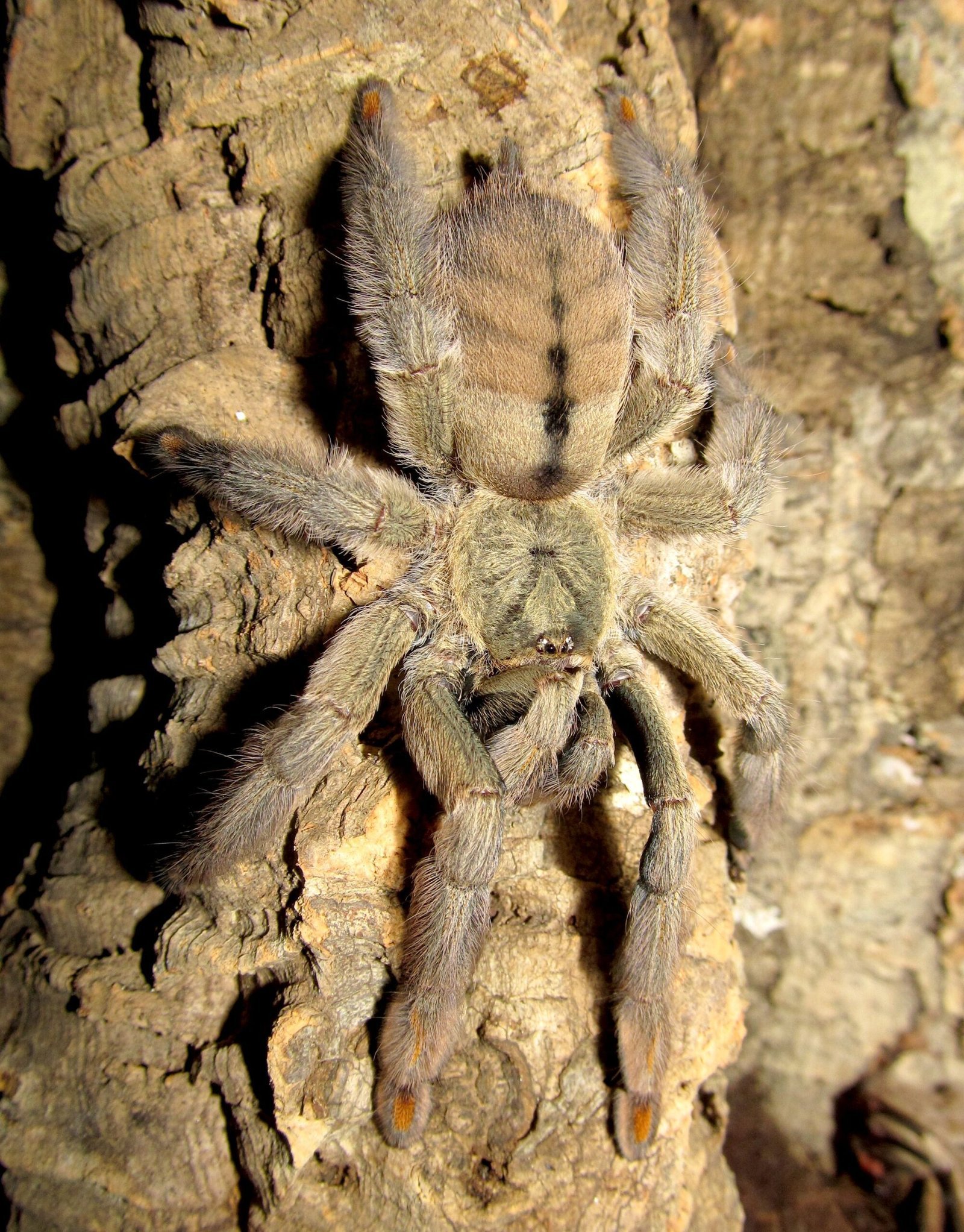
Psalmopoeus cambridgei, also known as the Trinidad Chevron Tarantula, is a captivating species native to the islands of Trinidad and Tobago. For enthusiasts, this species holds historical and ecological importance, being the type species of its genus and a staple in the arachnid hobby for over three decades. With a leg span of up to 6 inches, it stands as one of the largest tarantulas of its genus, combining beauty and impressive size.
Aesthetic and Dimorphic Features
Renowned for their stunning appearance, adult female Psalmopoeus cambridgei exhibit a brilliant grey-green hue accentuated with orange stripes on their metatarsi and a striking black abdominal pattern. The males, while slightly different, feature brush setae on their legs and a more subdued abdominal design, showcasing their dimorphic nature. Adding to their allure, these tarantulas undergo an ontogenetic color change as they mature, making each growth stage uniquely fascinating.
Care and Habitat Recommendations
As a New World arboreal species, Psalmopoeus cambridgei thrive in an environment mimicking their natural habitats. Housing them in a setup with coir substrate, a cork bark tube for hiding, and a water bowl is essential for their comfort. Maintaining temperatures between 21°C and 25°C ensures optimal health. Known for their hearty appetites, they should be fed regularly, making them relatively easy and rewarding to care for.
Breeding and Popularity in the Hobby
This species holds a special place in the tarantula-keeping community due to its ease of breeding and consistent availability as a captive-bred species. Whether you’re a novice enthusiast or an experienced keeper, the Psalmopoeus cambridgei offers a manageable, yet endlessly intriguing addition to your collection.